| - MRR TUTORIALS - TRACKPLAN - YARDS - SWITCHING YARD |  |
 |
SITE MAP |
Designing Realistic and Efficient Freight Yard
A freight yard is often the operational heart of a model railroad. While stations and scenery may attract the most attention, the yard is where trains are assembled, broken down and prepared for their next journey. Many model railroaders design yards by simply adding as many parallel tracks as possible. While this may look impressive, it often results in a yard that is difficult to operate and quickly becomes a source of frustration. A well-designed yard should be easy to reach, easy to switch and capable of handling train movements without disrupting the rest of the traffic of the layout.
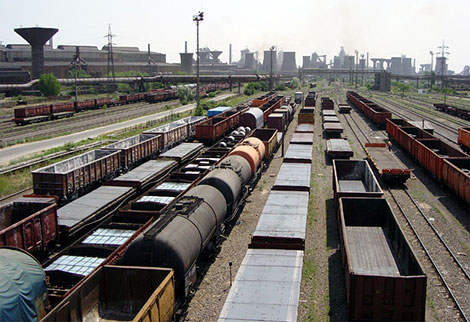
Switching yard with freight cars
What Does a Freight Yard Do?
The primary purpose of a freight yard is to sort and organize freight cars. Arriving trains are broken down into smaller groups of cars according to destination. These cars are then assembled into new outbound trains. On the prototype, yards also provide storage tracks, locomotive servicing facilities and car repair. Most model railroads only need a simplified version of these functions, but understanding the purpose of a yard helps determine how much space should be allocated to it.
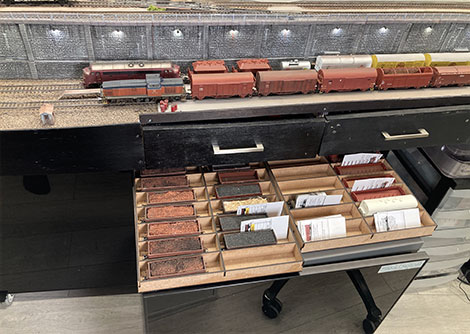
The staging yard on my layout "Gothenburg".
Staging Yard or Classification Yard?
Before designing a yard, decide what role it will play on the layout. A staging yard is primarily used to store complete trains (also see article about "Shadow Stations"). Trains arrive, wait, and later depart without switching. In some cases cargos are added or removed. Some cars may be removed completely by hand and put on hold for a later session. In this case, a simple ladder arrangement is usually sufficient, either with through-, or stub-end tracks.
A classification yard is different. Here the cars are actively sorted and rearranged during an operating session. This type of yard requires additional tracks and should be designed specifically for switching operations. If your layout will be operated by several people, a classification yard can become one of the most enjoyable jobs on the railroad.
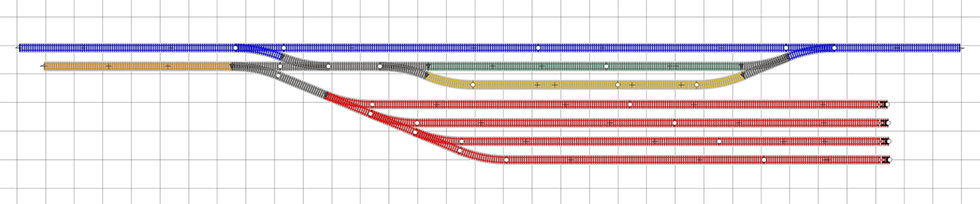
Trackplan for a basic classification yard.
Blue line is MAIN train line. Green and yellow are ARRIVAL and DEPARTURE tracks. Orange tracks is the YARD LEAD (Drill Track) and should have the same length or longer than the longest expected train. The red tracks are the CLASSIFICATION tracks used to sort freight cars for different destinantions.
The Importance of a Drill Track
One of the most common mistakes in model yard design is omitting a drill track, sometimes called a yard lead. The drill track allows the yard switcher to pull cuts of cars out of the classification tracks without fouling the main line. Without a dedicated lead, every switching movement blocks through traffic. A useful rule of thumb is that the drill track should be at least as long as the longest train expected to be handled in the yard. This allows an entire cut of cars to be pulled clear in a single movement.
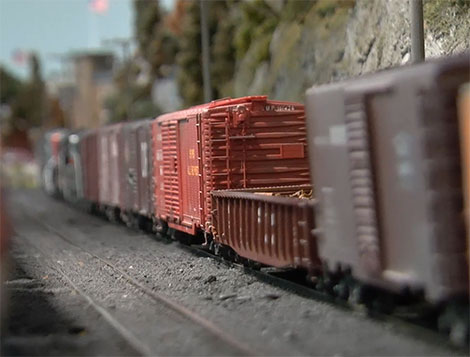
Switcher locomotive pulls the cars out on the yard lead.
Arrival and Departure Tracks
A busy yard should include dedicated arrival and departure tracks. These tracks act as a buffer between the main line and the classification tracks. Trains arriving from the main line can enter the yard and clear the main track quickly. Likewise, departing trains can be assembled and wait for clearance without interfering with switching operations. One of the key principles of efficient yard design is that the yard crew should be able to continue working while trains arrive and depart. A combined arrival and departure track can be selected if space is restricted and the expected number of daily trains small.
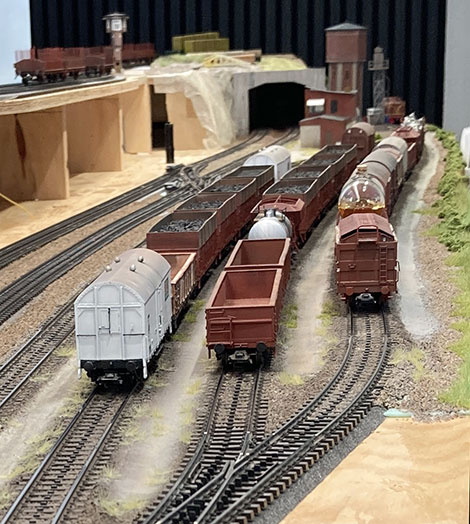
The yard ladder on my layout "Gothenburg".
Classification Tracks
Classification tracks are where the actual work takes place. Each track can be assigned to a specific destination, branch line or train. Cars are sorted into the appropriate track and later assembled into outbound trains. For most model railroads, it is usually better to have more classification tracks than arrival and departure tracks. A yard with one each arrival/departure tracks and four or five classification tracks provides a good balance between capacity and usability.
Keep the Yard Within Reach
Unlike the prototype, model railroad operators must physically reach into the yard. Turnouts need to be thrown, cars occasionally rerail, and manual uncoupling is often required.
If tracks are placed too far from the aisle, routine operations become difficult and frustrating. For this reason, yard ladders should generally be placed closest to the aisle whenever possible and have a maximum depth of 800mm. Important switching areas should always remain easily accessible. A slightly smaller yard that is easy to operate will provide far more enjoyment than a larger yard that is difficult to reach.
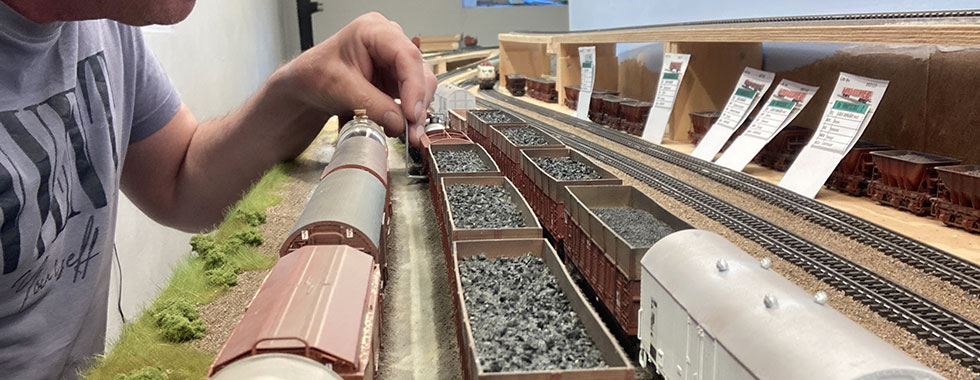
Easy to reach over the switching yard "Lärje" on the Gothenburg layout.
Avoid Common Design Mistakes
Several design mistakes appear repeatedly on model railroads. One is placing locomotive servicing facilities directly beside the yard ladder. Every movement to the fuel track, sand tower or engine shed then interferes with switching operations. Another mistake is arranging service tracks so that locomotives must perform multiple run-around moves simply to reach them. Whenever possible, service tracks should face the same direction as the rest of the yard. It is also wise to avoid unnecessary structures between the aisle and the tracks. While buildings may look attractive, they often obstruct access to the very areas where operators need to work.
Prototype Inspiration
Real railroads design their yards to move cars efficiently from arrival to departure with as little handling as possible. The same principle applies to model railroads. Cars should move progressively through the yard rather than constantly crossing back and forth. Many prototype yards also use double-ended tracks connected at both ends. This allows locomotives and cars to move more freely and often improves operational flexibility on a model railroad as well.
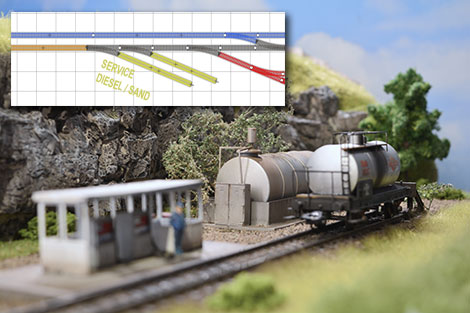
Service track placement (diesel-, water- & sand filling).
Conclusion
A successful freight yard is not necessarily the largest one. The best yards are those that support smooth operation and allow crews to work efficiently. By including a proper drill track, dedicated arrival and departure tracks, sufficient classification tracks and good operator access, even a relatively compact yard can handle a surprising amount of traffic. When planning a new layout, remember that the goal is not simply to fit as many tracks as possible into the available space. The goal is to create a yard that is enjoyable to operate and capable of supporting realistic railroad operations for years to come.